
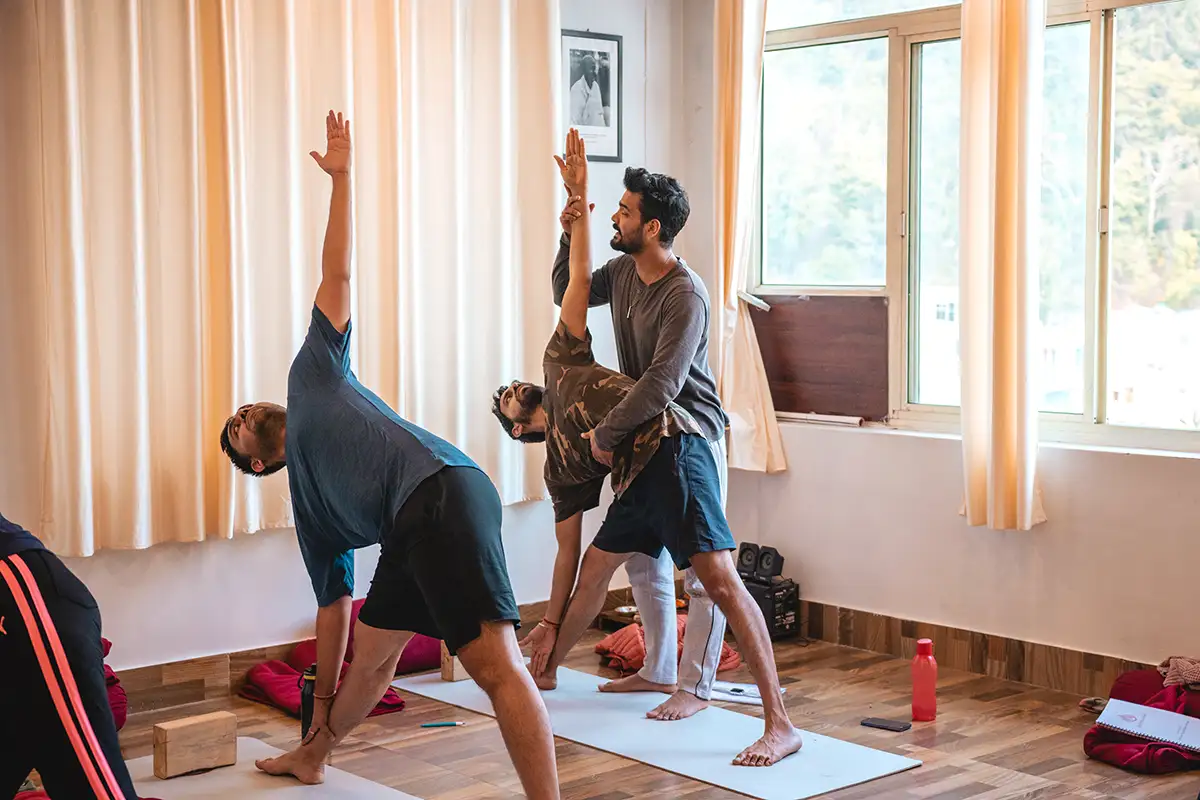
Not because yoga isn’t meaningful. I loved my mat time. Still do. But in my head, teacher training was for people who wanted to stand at the front of the room, chant confidently, and say things like “soften your jaw” without feeling awkward. That wasn’t me. I was the person who rolled into class five minutes late, unrolled my mat in the back, and hoped no one noticed when I skipped half the vinyasas.
And yet… here we are.
Over the last few years, I’ve talked to dozens of students, instructors, studio owners, and yes, a lot of curious yogis who aren’t sure if enrolling in a yoga teacher training course is a brilliant idea or an expensive identity crisis. The truth lives somewhere in between — and it’s a lot more interesting than the glossy Instagram version.
So let’s talk about it. Not in a salesy, spiritual-bypassing way. Just real talk.
Table of Contents
Why People Actually Sign Up for Yoga Teacher Training (Hint: It’s Not Always to Teach)
You might not know this, but a surprisingly large number of people who enroll in a 200-hour yoga teacher training never plan to teach a single class.
Some are burnt out professionals looking for a reset. Some are long-time students craving depth beyond the weekly drop-in class. Others are navigating a life transition — a breakup, a career pivot, a quiet sense that something needs to change.
I remember speaking to a woman who worked in corporate finance for 15 years. She told me, very plainly, “I don’t want to be a yoga teacher. I just want to feel like myself again.”
That stuck with me.
A solid training doesn’t just hand you a certificate. It reshapes how you breathe under pressure, how you listen to your body, and how you respond when things feel uncomfortable — on and off the mat. Teaching is optional. Transformation isn’t.
What to Look for Before You Enroll (Because Not All Programs Are Created Equal)
This part matters more than most people realize.
A yoga teacher training course can be profound… or deeply disappointing. The difference usually comes down to intention, structure, and the humans running the show.
First, look beyond the aesthetic. Beautiful photos of beaches and matching outfits are nice, but they won’t tell you how well anatomy is taught or whether you’ll feel supported when things get emotionally messy (and they often do).
Ask real questions:
- Who are the lead trainers, and how long have they been teaching?
- Is the curriculum balanced between physical practice, philosophy, anatomy, and practical teaching skills?
- Do they encourage critical thinking, or expect blind devotion?
One thing I always recommend? Talk to alumni. Not just the glowing testimonials on the website — actual humans who’ve completed the program. Ask what surprised them. Ask what they struggled with. If everyone gives you the same polished answer, that’s a red flag.
Also, trust your gut. If something feels off during an info call or orientation, it probably is.
The 200-Hour Experience: What Really Changes (It’s Not Just Your Downward Dog)
Let’s clear something up: you won’t magically become more flexible or serene just because you completed a 200-hour training.
What does happen is quieter — and honestly, more powerful.
You start noticing your patterns. How you react to correction. How you avoid discomfort. How you speak to yourself when a pose feels impossible. Those habits don’t stay on the mat. They show up in relationships, work, and daily decisions.
I was surprised to learn how much time in training is spent off the mat — journaling, discussing ethics, unpacking philosophy, learning how the nervous system works. It’s not all handstands and sun salutations.
And yes, it can be uncomfortable. There are moments where you’ll feel exposed, challenged, or unsure why you signed up in the first place. That’s kind of the point.
Growth rarely feels tidy.
Is Yoga Teacher Training Only for Future Teachers? The Honest Answer
Short answer: no.
Longer answer: it depends on what you want out of it.
If you’re looking for a quick certification to teach classes for extra cash, you might be disappointed. Teaching yoga well requires ongoing study, humility, and a willingness to keep learning long after the training ends.
But if you’re curious about yoga as a system — not just a workout — then a yoga teacher training course can be one of the most grounding educational experiences you’ll ever have.
I’ve met therapists who use what they learned to support clients, athletes who finally understood injury prevention, and parents who became better listeners simply because they learned how to pause and breathe.
Teaching is one expression of the training. Not the only valid outcome.
The Subtle Benefits No One Talks About Enough
Here’s what doesn’t always make it into the brochures.
You’ll likely become more discerning — about teachers, wellness trends, and even yourself. Once you understand anatomy and sequencing, it’s hard to blindly follow flashy flows that don’t make sense for your body.
You might lose interest in the performative side of yoga. Or at least see it for what it is.
You’ll also build community in a way that feels rare these days. There’s something about breathing, struggling, and learning alongside the same group of people that creates real connection. Not forced. Not curated. Just human.
And maybe, without trying, you’ll find your voice. Whether that’s teaching, writing, or simply speaking up for your needs.
A Natural Mention (Because Context Matters)
If you’re currently researching programs and feeling overwhelmed by options, I get it. A helpful starting point is exploring a well-structured yoga teacher training course that clearly outlines its curriculum, teaching philosophy, and post-training support. Transparency goes a long way, especially when you’re making a commitment of time, energy, and money.
Just remember — no program is “perfect.” The right one is the one that aligns with where you are right now.
Final Thoughts (The Kind You Sit With for a While)
If you’re on the fence, here’s my unsolicited advice: don’t enroll because you think you should. Enroll because something in you is curious. Restless. Ready to listen more closely.
Yoga teacher training isn’t an escape from real life. If anything, it drops you right into it — with a little more awareness and a lot more compassion.
And whether you end up teaching a room full of students, guiding a single friend through a breathing exercise, or simply understanding yourself better, that counts.


