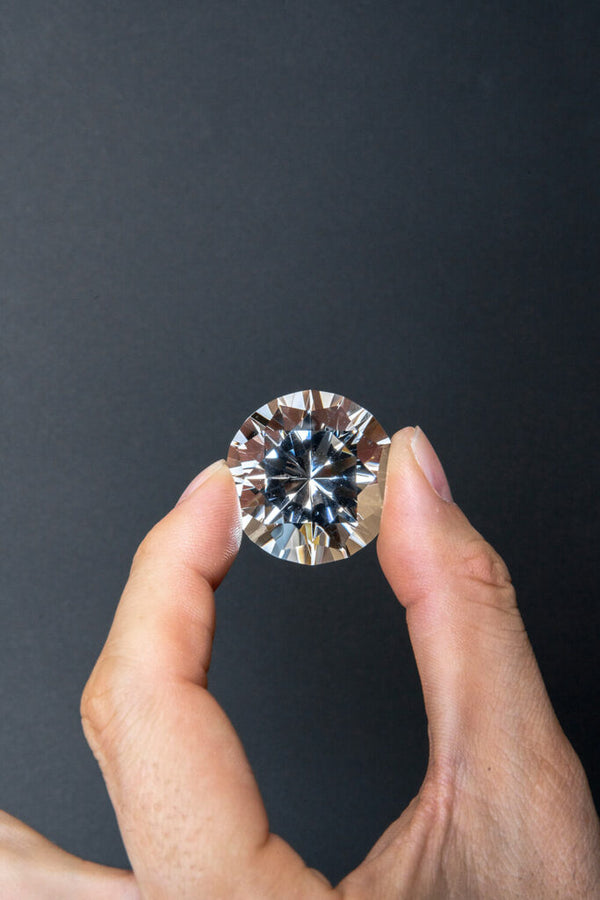

I’ve spent close to two decades at the bench as a working jeweller in Australia, and I’ll admit something right off the bat: the conversation around lab grown diamond vs real diamond has never been louder than it is today. Couples wander into my studio wide-eyed, clutching screenshots from Instagram, and asking, “So… what’s actually the difference?”
Well, you might not know this, but the answer is both simpler and more layered than most people expect. And honestly, after seeing trends shift, customers evolve, and the industry get a bit shaken up, I’ve come to love unpacking this topic — because it helps people make a choice that actually suits their values, not the noise around them.
So grab a cuppa, because if you’ve been tossing up lab grown diamond vs real diamond, this is the kind of grounded, real-world explanation you probably haven’t heard yet.
Table of Contents
Why the Debate Matters More Than Ever
When I first started making engagement rings, the idea of lab created diamonds felt almost sci-fi. Back then, customers barely asked about sustainability or traceability. Most simply wanted “a nice sparkler” within a certain budget.
But times have changed. Now we’re living in an era where people want to know the story behind what they’re buying — whether it’s their coffee beans, their sneakers, or the rock they’re planning to wear every day for the rest of their life. The lab grown diamond vs real diamond debate is really a conversation about ethics, value, technology, and identity all rolled into one.
You see, diamonds have always symbolised something deeper than carbon under pressure. They’ve meant commitment, celebration, and often, a marker of personal achievement. But with lab created diamonds becoming so accessible and so beautifully made, Australians are starting to question what “real” even means.
What “Real” Actually Means — Scientifically Speaking
Here’s the part that still surprises people: when you compare lab grown diamond vs real diamond, the actual chemical composition is identical. We’re talking pure crystalline carbon, same refractive index, same Mohs hardness, same sparkle.
A diamond grown under controlled lab conditions isn’t a “fake diamond.” It’s not cubic zirconia. It’s not moissanite. It’s not a simulant of any kind. It is a diamond, full stop.
The difference lies in how it’s formed. One comes out of the ground after millions of years. The other comes out of a lab after a few weeks. But structurally? They’re twins.
That said, the conversation around lab grown diamond vs real diamond isn’t purely scientific — and that’s where things get interesting.
The Ethics: A Big Driver for Modern Buyers
If you ask me what’s pushed the popularity of lab created diamonds in Australia over the past five years, I’d point to ethics first.
Mining isn’t inherently evil, but large-scale operations can have complex social and environmental impacts. Many buyers tell me they simply feel more comfortable knowing their stone didn’t require earth-moving machinery or contribute to questionable supply chains.
A lot of people who choose lab grown diamonds say the decision “just feels right,” and I completely understand that. If you’re curious to dig deeper into the ethical angle, the guide at lab grown diamond vs real diamond is one of the clearest resources I’ve seen, especially for first-time buyers.
Of course, that doesn’t mean natural diamonds are unethical by default — many are traceable, responsibly sourced, and certified. But people today like options, and I think that choice is a good thing.
Value and Pricing: Where the Two Really Diverge
Now, here’s where my jeweller’s hat comes on properly. When comparing lab grown diamond vs real diamond, you’ll notice a pretty significant price difference.
Lab grown diamonds usually cost between 50% to 70% less than natural diamonds of the same size and quality. That’s not because they look worse or wear down faster — it’s because they’re not limited by nature or mining supply chains.
I’ve had couples nearly fall off their chairs when they realise they can afford a much larger stone than they expected simply by going lab grown. And honestly? Seeing the joy on their faces never gets old.
But let me be transparent: the resale value of lab grown diamonds is lower. Natural diamonds hold value better because they’re finite resources. If long-term investment matters to you, that’s something to factor in.
This is why understanding lab grown diamond vs real diamond is less about which one is “better” and more about which one matches your priorities — ethics, budget, personal philosophy, or long-term value.
Appearance and Durability: Can Anyone Tell the Difference?
Short answer? No. Unless you hand the stone to a gemmologist with specialised equipment, nobody can tell a lab created diamond apart from a mined diamond. Not with the naked eye. Not with a loupe. Not even under most standard microscopes.
From a durability perspective, they’re identical. I’ve set hundreds of lab created diamonds and they behave exactly the same as natural stones under heat, pressure, polishing, and wear. There’s no compromise on longevity.
When the debate around lab grown diamond vs real diamond pops up online, I sometimes see people claim lab diamonds “won’t last.” That’s misinformation. They absolutely will — they’re real diamonds.
Fashion, Culture, and the Changing Shape of Luxury
As an Australian jeweller who also keeps an eye on global trends, I’ve noticed a subtle but important shift: luxury is no longer defined purely by scarcity. It’s defined by conscious choice.
Gen Z and Millennials — who make up most engagement ring buyers — value transparency and ethics alongside aesthetics. And while natural diamonds still carry a sense of old-school romance, lab grown diamond vs real diamond choices are now driven by lifestyle fit rather than tradition alone.
I’ve worked with fashion-forward clients, eco-minded couples, and even investors, each with different reasons for choosing lab grown or mined stones. That’s the beauty of today’s market: your jewellery can reflect who you are, not who the industry says you should be.
If you’re interested in the styling side of ethically sourced gems, there’s a great everyday-wear guide linked through the discussion on lab created diamonds, and it’s surprisingly practical.
So Which Should You Choose?
If you’re expecting me to declare a winner in the lab grown diamond vs real diamond debate, I’ll disappoint you — but in the best way.
Because there isn’t a winner.
There’s only the choice that fits your story.
If you love the idea of a stone formed deep beneath the earth over millions of years, something that carries a sense of natural rarity and tradition, then a mined diamond will speak to you.
If your heart leans toward conscious consumption, modern innovation, environmental consideration, and getting a bigger stone for your budget, then lab created diamonds make complete sense.
Both are valid. Both are beautiful. Both can symbolise love, commitment, celebration, or personal achievement.
A Final Reflection From the Bench
Every time I craft a ring — whether I’m setting a natural diamond or a lab grown one — I think about the moment someone will open that box. That tiny, breath-holding moment where the world stops and all that matters is love, excitement, or a big milestone.
And in that moment? Nobody’s thinking about lab grown diamond vs real diamond.
They’re thinking about the meaning behind it.
So choose the gem that aligns with your values, your budget, your story. Choose the one that feels right when you picture yourself wearing it decades from now. That’s the real measure of a perfect diamond — lab grown or mined — and it’s the one metric that never steers anyone wrong.