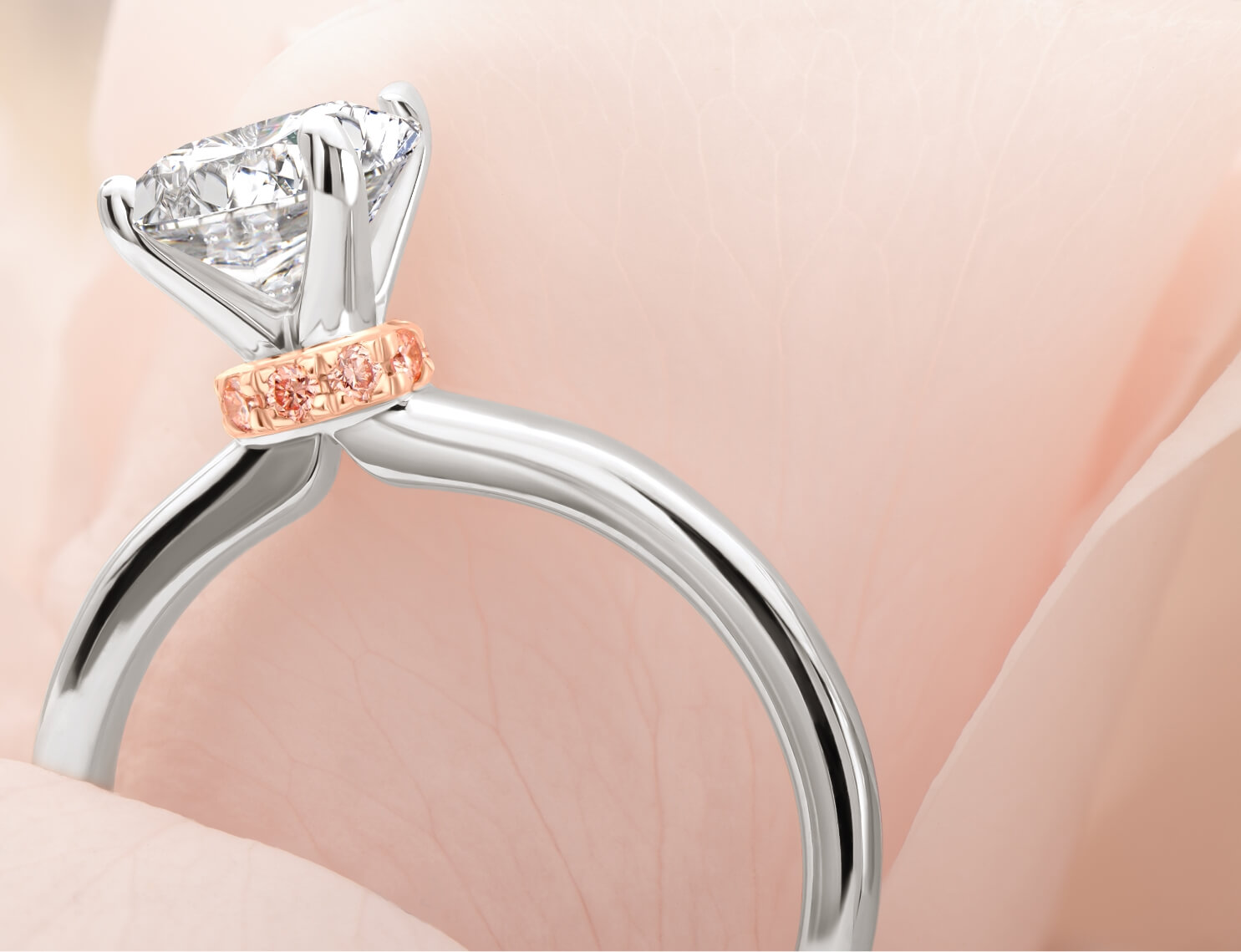

Two diamonds sitting side by side can create a striking engagement ring, but their size and placement matter more than many buyers expect. A small change in the angle of one stone can affect the entire design. Even two beautiful diamonds may look unbalanced if their proportions do not work together.
The toi et moi design offers room for personal choices. Buyers can combine different diamond shapes, adjust the setting, or select stones with individual meanings. The challenge is creating a ring that looks balanced and remains comfortable for regular wear.
Table of Contents
The Meaning Behind Two-Stone Rings
The French phrase toi et moi means “you and me.” In jewellery, it describes a design featuring two main gemstones, often placed close together or angled towards each other.
The two stones traditionally represent two people in a relationship. This makes the style a meaningful option for engagement rings, anniversaries and other personal occasions.
Unlike a solitaire ring, which features one central gemstone, a two-stone design creates a relationship between both diamonds. Their shapes, sizes and positions influence how the finished piece looks.
Some designs use matching diamonds for a balanced appearance. Others combine contrasting shapes to create a less traditional setting.
Diamond Shape Pairings That Work Well Together
The shape of each diamond affects the ring’s overall proportions. Two stones do not need identical measurements, but they should complement each other visually.
Pear and Oval Diamonds
A pear-shaped diamond has one rounded end and one pointed tip. An oval diamond has a softer, elongated outline.
Together, these shapes create an interesting contrast without making the design appear too busy.
The direction of the pear’s pointed end matters. It can face towards the oval, away from it, or sit at a slight angle. Each arrangement changes the ring’s appearance.
Emerald and Pear Diamonds
An emerald-cut diamond has straight edges and stepped facets. Its geometric appearance contrasts with the curved outline of a pear-shaped stone.
This combination can suit buyers who prefer a structured design with an unusual detail.
Emerald cuts tend to show inclusions more readily than brilliant-cut diamonds. Buyers should examine clarity carefully, especially when choosing a larger stone.
Round and Marquise Diamonds
Round brilliant diamonds have a symmetrical outline and strong light performance when well cut. Marquise diamonds are longer, with pointed ends.
Combining them creates contrast between a circular shape and an elongated silhouette.
The marquise diamond requires particular attention to its pointed tips. Protective prongs can help reduce the risk of damage during everyday activities.
Matching Diamond Sizes Without Losing Balance
A common mistake is assuming both diamonds must have the same carat weight.
Carat measures weight, not visible size. Different shapes can have different face-up dimensions even when their carat weights are equal.
For example, a 1-carat oval diamond may appear longer than a 1-carat round diamond. Its actual appearance also depends on the stone’s proportions and depth.
Buyers should compare the visible measurements of both stones rather than relying on carat weight alone.
A useful approach is to examine the proposed design from three angles:
- Top view: Check whether one diamond visually dominates the other.
- Side view: Look at the height of both settings and how far they rise above the finger.
- Hand view: Consider whether the combined width suits the wearer’s finger and preferred style.
A jeweller’s drawing or CAD rendering can help buyers understand these proportions before the ring is made.
Setting Details That Affect Everyday Wear
Two-stone rings can have more exposed edges than traditional solitaire designs. The position of each diamond determines where the prongs sit and whether the stones are vulnerable to knocks.
Prong settings allow more of each gemstone to remain visible. However, the prongs must be positioned carefully, especially around pointed diamond shapes.
A bezel setting surrounds the diamond’s edge with metal. It can offer additional edge protection, although it changes the appearance of the stones and may make the design look heavier.
The distance between the diamonds deserves attention too.
If the stones sit extremely close together, cleaning the narrow space may become difficult. If they sit too far apart, the design can lose its visual connection.
For buyers who wear their rings daily, a lower-profile setting may be more practical than a tall arrangement that catches on clothing.
Lab-Grown Diamonds and Design Flexibility
Lab-grown diamonds have essentially the same chemical composition, crystal structure and optical properties as natural diamonds. Their main difference is how they form.
Natural diamonds develop through geological processes, while laboratory-grown diamonds are produced under controlled conditions.
For a two-stone ring, lab-grown options can give buyers greater flexibility within a fixed budget. They may allow room for larger diamonds, a different shape combination or more detailed setting work.
However, diamond origin does not determine cut quality.
A poorly proportioned laboratory-grown diamond can still have weak light performance. Buyers should examine each stone individually rather than assuming both will look equally bright.
Independent grading reports can provide useful information about carat weight, colour, clarity and other characteristics. The details available depend on the laboratory and report type.
For those comparing a toi et moi ring, it is useful to review the individual diamond specifications alongside the finished setting design.
Choosing a Metal That Suits Both Stones
The metal colour changes how the diamonds appear together.
Platinum has a naturally white appearance and is commonly used for fine jewellery. It is durable, although it can develop surface marks and a patina through wear.
White gold offers a similar light-coloured appearance. Many white gold rings have rhodium plating, which may need renewing as it wears.
Yellow gold creates a warmer contrast around colourless or near-colourless diamonds. It can also suit vintage-inspired two-stone designs.
Rose gold has a pinkish tone that gives the ring a softer appearance. Its colour comes from the metals used in the gold alloy, including copper.
For Hong Kong buyers, it is useful to confirm the metal fineness, such as 18K gold or platinum 950, rather than relying only on the colour description.
Will the Ring Sit Properly Beside a Wedding Band?
Wedding-band compatibility is easy to overlook during engagement ring shopping.
Some two-stone settings extend beyond the centre of the band. Their shape may prevent a straight wedding ring from sitting flush against the engagement ring.
This does not necessarily mean the design is unsuitable. It simply affects the choice of wedding band.
A curved or contoured wedding band may follow the outline of the engagement ring more closely.
Buyers who prefer a straight band should discuss this before finalising the setting. Small adjustments to the height or position of the diamonds may improve compatibility, although some designs will still leave a visible gap.
Details to Confirm Before Ordering in Hong Kong
Custom jewellery requires more than selecting attractive diamonds from photographs.
Before approving an order, ask the jeweller to confirm the ring size, diamond measurements, setting height and final arrangement of the stones.
It is also sensible to establish whether the design can be resized later. Some two-stone settings are harder to alter because of their construction or the position of the gemstones.
For online or custom orders, check the following details:
- Whether both diamonds have independent grading reports
- Whether CAD images show the actual proposed proportions
- Whether the quoted price includes the completed setting
- What happens if the finished ring requires a size adjustment
- Whether custom-made orders qualify for returns or exchanges
- What maintenance and repair services are available
Hong Kong buyers lab diamonds from a local or international jeweller should also confirm the expected delivery arrangements and any applicable charges.
The final design should be assessed as a complete piece, rather than as two separate diamonds. Stone proportions, prong placement, metal thickness and wedding-band clearance all affect how the ring looks and feels after years of wear.